Introduction
Maintaining a professional office environment requires more than occasional cleaning. From reception areas and workstations to meeting rooms, washrooms and pantries, every part of an office needs regular attention. As businesses grow and employee numbers increase, managing these cleaning requirements becomes more demanding.
Dust accumulation, overflowing waste bins, untidy common areas, poorly maintained washrooms and neglected pantry spaces can affect the overall condition of an office. These issues may also create additional responsibilities for administrative teams and facility managers.
This is why many organizations rely on professional corporate housekeeping services to maintain their workplaces.
Corporate housekeeping involves planned cleaning activities, trained personnel, suitable cleaning materials, supervision and regular quality checks. A structured approach helps businesses maintain consistent cleaning standards across different departments and shared facilities.
However, selecting a housekeeping provider is only one part of the process. Businesses must also understand what services are required, how frequently different areas should be cleaned, what standards should be followed and how service quality should be monitored.
This guide explains the key elements of corporate housekeeping, practical office cleaning schedules, quality control methods and important considerations when selecting a professional housekeeping service provider.
What Are Corporate Housekeeping Services?
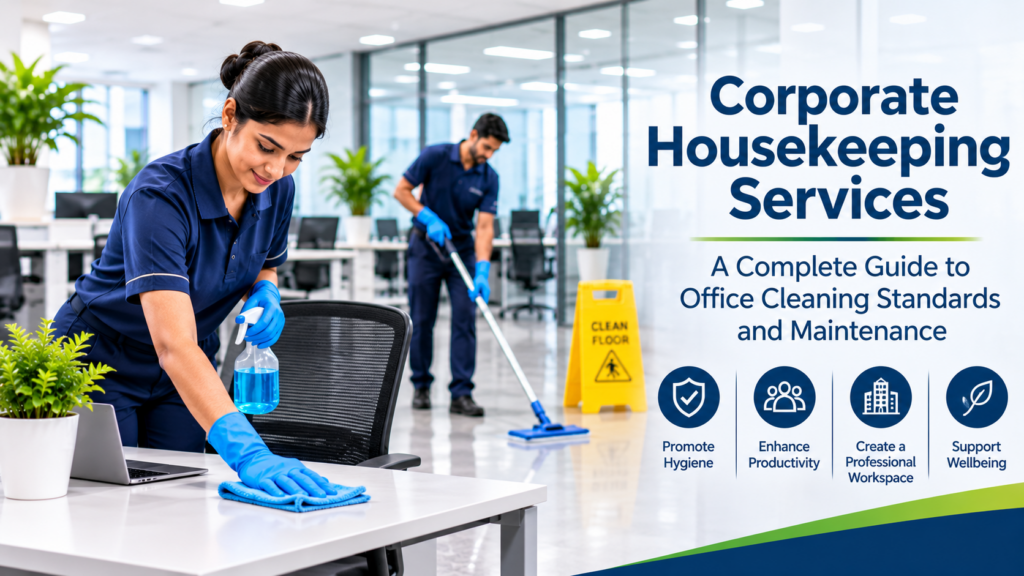
Corporate housekeeping services refer to professional cleaning and upkeep activities carried out in offices, corporate buildings and commercial workplaces.
These services are designed to maintain hygiene, cleanliness and organization across the workplace. Depending on the requirements of the business, housekeeping may be provided during office hours, before operations begin, after working hours or across multiple shifts.
A typical corporate housekeeping arrangement may include:
- Daily office cleaning
- Workstation and furniture cleaning
- Floor sweeping, mopping and maintenance
- Washroom cleaning and sanitation
- Pantry and cafeteria cleaning
- Reception and lobby maintenance
- Meeting-room cleaning
- Glass partition and window cleaning
- Waste collection and disposal
- Common-area maintenance
- Periodic deep cleaning
- Restocking agreed cleaning and hygiene supplies
The scope of work should be defined according to the office layout, number of employees, visitor movement, operating hours and facility requirements.
A professional housekeeping program also establishes responsibility for each task, cleaning frequency, inspection procedures and reporting methods.
Why Businesses Need Professional Corporate Housekeeping Services
Office cleaning may appear straightforward, but maintaining consistent standards across a busy workplace requires planning and supervision.
Professional housekeeping support can help businesses manage several operational requirements.
1. Consistent Office Cleaning Standards
When cleaning activities are handled without a defined process, the quality of work may vary from one area or shift to another.
A professional housekeeping arrangement can establish standard operating procedures, task schedules and inspection checklists. This makes it easier to maintain consistent cleaning practices.
2. Better Management of Shared Facilities
Washrooms, pantries, meeting rooms, reception areas and corridors are used by many people throughout the day.
These areas may require attention more frequently than individual offices. Dedicated housekeeping staff can follow scheduled checks and respond to additional cleaning requirements.
3. Reduced Administrative Workload
Facility managers and administrative teams often handle several responsibilities, including vendor coordination, employee support, building maintenance and daily operations.
Managing housekeeping independently can add to their workload.
Outsourcing these activities to a professional provider can help establish a dedicated service structure, allowing internal teams to concentrate on their primary responsibilities.
4. Professional Workplace Appearance
The condition of an office can influence how visitors, clients, candidates and employees perceive an organization.
Clean floors, maintained furniture, organized reception areas and hygienic washrooms contribute to a professional business environment.
5. Better Cleaning Supervision
Housekeeping quality should be checked regularly rather than assumed.
Professional service arrangements may include supervisors, inspection checklists, attendance monitoring and service reporting. These practices help identify missed tasks and areas that require improvement.
Types of Corporate Housekeeping Services
Different office environments have different cleaning requirements. A small office may need a limited housekeeping team, while a large corporate building may require multiple personnel and several cleaning shifts.
The following are common services included in corporate housekeeping arrangements.
1. Daily Office Cleaning Services
Daily office cleaning covers routine tasks required to maintain a clean and organized working environment.
Activities may include:
- Sweeping and mopping floors
- Dusting accessible furniture and surfaces
- Cleaning workstations as per office procedures
- Emptying waste bins
- Cleaning glass partitions
- Maintaining corridors and common areas
- Cleaning reception spaces
- Checking meeting rooms
Daily cleaning schedules should be planned to avoid unnecessary disturbance to employees.
2. Washroom Cleaning and Maintenance
Washrooms require frequent cleaning because they are shared facilities used throughout the working day.
A washroom maintenance routine may include:
- Cleaning washbasins and mirrors
- Cleaning toilets and urinals
- Disinfecting suitable touchpoints
- Mopping floors
- Removing waste
- Checking soap and tissue supplies
- Reporting plumbing problems
- Maintaining cleaning records
The cleaning frequency should depend on the number of users and the operating hours of the office.
3. Pantry and Cafeteria Cleaning
Pantries and cafeteria areas can collect food residue, spills and waste during the day.
Regular housekeeping helps maintain these spaces in suitable condition.
Typical activities include:
- Cleaning pantry counters
- Cleaning sinks and wash areas
- Wiping tables and accessible surfaces
- Mopping floors
- Removing food waste
- Cleaning designated appliances externally
- Checking waste bins
- Maintaining general pantry organization
Food preparation and handling activities should follow the relevant hygiene requirements and the facility’s own procedures.
4. Reception and Lobby Cleaning
Reception areas are among the most visible spaces in an office.
Housekeeping activities may include floor cleaning, furniture dusting, glass cleaning, waste removal and maintaining the overall appearance of the visitor area.
These tasks should be scheduled regularly, particularly in offices that receive frequent visitors.
5. Meeting Room Maintenance
Meeting rooms are used for client discussions, presentations, interviews and internal meetings.
A room-check routine can include cleaning tables, arranging chairs, removing waste, cleaning accessible surfaces and preparing the room for its next use.
6. Glass and Window Cleaning
Glass partitions, entrance doors and accessible windows can collect fingerprints, dust and marks.
Regular cleaning helps maintain the appearance of the office while ensuring that suitable tools and safe working methods are used.
High-level or difficult-to-access glass cleaning should be handled by trained personnel using appropriate safety arrangements.
7. Deep Cleaning Services
Routine cleaning addresses everyday dirt and waste. Deep cleaning focuses on areas that require more detailed attention.
Depending on the facility, deep cleaning may include:
- Carpet and upholstery cleaning
- Detailed floor cleaning
- Cleaning difficult-to-reach areas
- Intensive washroom cleaning
- Furniture and fixture cleaning
- Detailed pantry cleaning
- Cleaning accessible high surfaces
Deep cleaning frequency should be based on the type of workplace, surface materials and usage conditions.
How to Create an Effective Office Housekeeping Schedule
A structured cleaning schedule helps ensure that all areas receive appropriate attention.
The schedule should be developed after reviewing office size, employee strength, foot traffic and operating hours.
Daily Cleaning Schedule
Daily tasks generally cover areas that experience regular use.
| Area | Typical Daily Activities |
|---|---|
| Reception | Floor cleaning, furniture dusting and waste removal |
| Workstations | Accessible surface cleaning and waste collection |
| Washrooms | Cleaning, sanitation and supply checks |
| Pantry | Counter, sink, table and floor cleaning |
| Meeting rooms | Table cleaning, waste removal and room arrangement |
| Corridors | Sweeping, mopping and waste removal |
| Common areas | Surface cleaning and general upkeep |
Weekly Cleaning Schedule
Weekly tasks provide additional attention to areas that may not require detailed cleaning every day.
Examples include:
- Detailed dusting of selected furniture
- Cleaning accessible glass partitions
- Cleaning selected fixtures and fittings
- Detailed cleaning of pantry storage exteriors
- Cleaning areas behind movable furniture where safe
- Checking less frequently used spaces
Monthly or Periodic Cleaning Schedule
Periodic tasks should be planned according to facility requirements.
These may include:
- Carpet shampooing or extraction cleaning
- Upholstery cleaning
- Detailed floor treatment
- Intensive cleaning of selected areas
- Cleaning difficult-to-reach surfaces
- Review of housekeeping equipment
- Evaluation of cleaning standards
The schedule should remain flexible enough to accommodate special events, increased visitor movement and unexpected cleaning requirements.
Essential Cleaning Standards Every Corporate Office Should Follow
A housekeeping program should define clear expectations for each area.
Workstation Cleaning Standards
Workstations should be maintained without disturbing employees’ documents, personal belongings or electronic equipment.
Cleaning personnel should follow office procedures and avoid handling confidential papers or sensitive devices.
Floor Cleaning Standards
Floors should be cleaned using methods suitable for the surface material.
Wet-floor signs should be displayed when necessary, and cleaning should be planned to reduce slip risks and interruptions.
Washroom Standards
Washrooms should be maintained through regular cleaning, appropriate disinfection, waste removal and supply checks.
Inspection records can help ensure that cleaning activities are completed at the required intervals.
Pantry Standards
Pantry counters, sinks, tables and floors should be maintained in clean condition. Waste should be removed regularly, and spills should be attended to promptly.
Waste Management Standards
Waste collection should follow the organization’s waste segregation procedures and applicable local requirements.
Bins should be emptied regularly, and waste storage areas should be maintained appropriately.
How to Monitor the Quality of Corporate Housekeeping Services
Providing housekeeping staff does not automatically guarantee good cleaning quality. Businesses should establish a monitoring process to evaluate service performance.
1. Prepare Area-Wise Checklists
Create separate checklists for reception areas, workstations, washrooms, pantries, meeting rooms and other common spaces.
Each checklist should specify the required activities and inspection frequency.
2. Conduct Regular Inspections
Supervisors or authorized facility representatives should inspect selected areas to verify that the required tasks have been completed.
Inspections should cover visible cleanliness, waste management, washroom condition and the overall upkeep of shared spaces.
3. Monitor Attendance and Shift Coverage
Housekeeping schedules should clearly define staffing requirements and shift responsibilities.
Attendance monitoring helps identify staffing gaps that may affect service delivery.
4. Record Complaints and Service Requests
Businesses should maintain a clear process for employees and facility managers to report housekeeping concerns.
Each complaint should be recorded, assigned to the responsible person and followed up until it is addressed.
5. Review Service Performance
Regular service reviews help identify recurring problems and areas where cleaning schedules or work methods need adjustment.
Feedback should be based on measurable observations rather than general impressions.
Common Challenges in Corporate Housekeeping
Businesses may experience several challenges when managing office housekeeping.
High Employee and Visitor Movement
Large offices and corporate buildings may experience continuous movement throughout the day.
Entrances, washrooms, corridors and pantries can become dirty quickly. Cleaning schedules should account for high-traffic periods and the need for additional checks.
Maintaining Cleanliness During Working Hours
Cleaning during office hours requires coordination with employees and departments.
Housekeeping staff should work in a way that minimizes noise, disturbance and obstruction of walkways.
Managing Multiple Office Locations
Organizations with several branches may struggle to maintain the same housekeeping standards across all locations.
Standard procedures, common checklists and periodic reviews can help improve consistency.
Cleaning Material and Equipment Management
Cleaning supplies and equipment must be available when required.
Businesses should monitor stock levels, equipment condition and the suitability of cleaning products for different surfaces.
Staff Availability and Training
Absence, staff turnover and insufficient training can affect housekeeping operations.
A professional service arrangement should define supervision, staff replacement procedures and training expectations.
Safety Practices for Corporate Housekeeping Staff
Cleaning activities involve equipment, chemicals, wet floors and interaction with employees and visitors. Safety should be included in every housekeeping plan.
Important practices include:
- Providing appropriate personal protective equipment
- Following cleaning chemical instructions
- Using suitable cleaning materials for each surface
- Keeping chemical containers properly labelled
- Avoiding the mixing of incompatible chemicals
- Displaying wet-floor signs when required
- Keeping electrical equipment away from water
- Using approved methods for working at height
- Reporting damaged equipment and unsafe conditions
- Following the office’s emergency procedures
Housekeeping personnel should receive appropriate training before performing tasks that involve equipment, chemicals or other workplace risks.
In-House Housekeeping vs Outsourced Corporate Housekeeping Services
Businesses generally choose between managing housekeeping internally and hiring an external service provider.
Both approaches have different requirements.
| Factor | In-House Housekeeping | Outsourced Housekeeping |
|---|---|---|
| Staff management | Managed internally | Managed through the service arrangement |
| Recruitment | Responsibility of the business | Generally handled by the provider |
| Training | Organized internally | May be provided by the service provider |
| Supervision | Internal supervisors | Provider supervision as agreed |
| Scheduling | Managed by internal teams | Planned with the service provider |
| Service scope | Defined internally | Defined through the service agreement |
| Cost planning | Direct staffing and supply costs | Contract-based service costs |
The right option depends on business size, operational needs, internal resources and the level of service control required.
Before outsourcing, organizations should clearly define staffing, consumables, equipment, supervision, cleaning frequency and additional service charges.
How to Choose the Right Corporate Housekeeping Service Provider
Selecting a suitable housekeeping company is an important decision because the provider will work within the organization’s premises and interact with employees and visitors.
Consider these factors before finalizing a service provider.
1. Industry Experience
Check whether the provider has experience managing corporate offices, commercial buildings or similar facilities.
Different workplaces have different cleaning requirements, so relevant experience can be useful.
2. Trained Housekeeping Personnel
Ask about staff training, supervision, workplace conduct and cleaning procedures.
Personnel should understand the requirements of a professional office environment.
3. Customized Cleaning Plans
The provider should be able to prepare a cleaning schedule according to office size, employee strength, facility layout and operating hours.
4. Supervision and Quality Checks
Understand how supervisors inspect work, monitor attendance and address service concerns.
A defined monitoring process helps maintain accountability.
5. Safety Procedures
Check how the company handles cleaning chemicals, personal protective equipment, equipment operation and wet-floor risks.
6. Clear Service Agreement
The agreement should define:
- Areas covered
- Cleaning tasks
- Staff strength and shift timings
- Cleaning frequency
- Consumables and equipment responsibilities
- Supervision arrangements
- Reporting procedures
- Additional or specialized cleaning requirements
- Service review process
Clear terms reduce confusion and help both parties understand their responsibilities.
7. Ability to Support Changing Requirements
Office requirements may change when employee strength increases, departments move or additional workspaces are introduced.
Choose a provider that can discuss service adjustments according to changing operational needs.
Why Corporate Housekeeping Should Be Part of Facility Management
Housekeeping is closely connected with the wider management of a workplace.
A clean office depends not only on cleaning staff but also on building maintenance, waste management, supply coordination, safety procedures and proper supervision.
When housekeeping is coordinated with facility management, organizations can manage several workplace requirements through a more structured approach.
For example:
- Housekeeping staff can report plumbing leaks or damaged fixtures.
- Facility teams can coordinate repairs in areas where cleaning is affected.
- Waste management can be aligned with cleaning schedules.
- Common-area maintenance can be coordinated with housekeeping inspections.
- Pantry and washroom supply requirements can be monitored through routine checks.
This coordination can help organizations maintain their workplaces more effectively.
How Arise Facility Solutions Provides Corporate Housekeeping Support
Arise Facility Solutions is a professional facility management company providing housekeeping and integrated facility management solutions for corporate and industrial establishments.
The company offers corporate housekeeping services designed to support the day-to-day cleaning and upkeep requirements of business premises.
Its service portfolio also includes industrial housekeeping, facility management, manpower solutions, technical maintenance, pest control, landscaping and other workplace support services.
For organizations, having access to coordinated facility support can help simplify the management of cleaning and other operational requirements.
Arise Facility Solutions aims to help businesses maintain clean, safe and professionally managed workplaces through service arrangements aligned with their facility requirements.
Businesses searching for corporate housekeeping services in Mumbai, Navi Mumbai and Thane can explore the solutions offered by Arise Facility Solutions.
Visit the website: https://arisefacilitysolutions.com/
Conclusion
Corporate housekeeping services are an essential part of maintaining professional office environments. A successful housekeeping program requires more than routine cleaning. It needs defined responsibilities, area-wise schedules, trained personnel, suitable materials, safety procedures and regular quality inspections.
Businesses that establish clear housekeeping standards can manage their workplace cleaning requirements more systematically and provide employees and visitors with a well-maintained environment.
Whether an organization operates a small office, a large corporate building or multiple business locations, professional housekeeping support can help maintain consistency across its facilities.
By working with an experienced service provider such as Arise Facility Solutions, businesses can plan their housekeeping requirements and support the wider management of their workplaces.
Frequently Asked Questions
1. What is included in corporate housekeeping services?
Corporate housekeeping commonly includes office cleaning, workstation maintenance, floor cleaning, washroom sanitation, pantry cleaning, reception maintenance, waste collection and periodic deep cleaning.
2. How often should corporate offices be cleaned?
Most offices require daily cleaning, while high-traffic areas such as washrooms, entrances and pantries may need multiple checks during the day. Deep cleaning can be scheduled periodically.
3. What is the difference between corporate housekeeping and office cleaning?
Office cleaning generally refers to cleaning activities within an office. Corporate housekeeping can cover a broader range of activities, including cleaning schedules, supervision, waste management, hygiene checks and ongoing upkeep of shared facilities.
4. Why should businesses outsource corporate housekeeping?
Outsourcing can provide access to dedicated housekeeping personnel, structured schedules and service supervision. It can also reduce the administrative burden of managing daily cleaning activities internally.
5. Are washroom cleaning services included in corporate housekeeping?
Washroom cleaning is commonly included, although the exact scope and frequency should be confirmed in the service agreement.
6. Do corporate housekeeping services include pantry cleaning?
Yes, pantry cleaning can be included. Typical activities involve cleaning counters, sinks, tables, floors and designated common surfaces.
7. What factors determine the cost of corporate housekeeping services?
Cost depends on office size, required staff strength, working hours, cleaning frequency, service scope, equipment, consumables and specialized cleaning requirements.
8. How can businesses check housekeeping service quality?
Businesses can use area-wise checklists, supervisor inspections, attendance records, employee feedback and periodic service reviews to monitor quality.
9. What training should housekeeping staff receive?
Training should cover cleaning methods, chemical safety, equipment handling, personal protective equipment, waste management, workplace conduct and emergency reporting procedures.
10. Can housekeeping services be customized for different office sizes?
Yes. Cleaning schedules, staffing requirements and service scope can be planned according to office layout, employee numbers, operating hours and facility usage.
11. What is deep cleaning in corporate housekeeping?
Deep cleaning involves detailed cleaning of areas and surfaces that may not receive intensive attention during routine daily cleaning. Examples include carpets, upholstery, selected floor treatments and difficult-to-reach surfaces.
12. How do I choose a reliable corporate housekeeping company?
Review the provider’s experience, staff training, supervision process, safety practices, service scope, communication procedures and ability to customize cleaning plans.