Introduction
Managing a commercial building, corporate office, manufacturing plant, or warehouse involves more than maintaining the physical premises. Businesses must coordinate housekeeping, technical maintenance, security, waste management, landscaping, pantry operations, and other support services to keep daily operations running smoothly.
When these responsibilities are managed separately, organizations can face communication gaps, inconsistent service quality, delayed maintenance, and increasing administrative workloads. Facility managers may spend a considerable amount of time coordinating vendors instead of focusing on workplace performance and long-term planning.
Integrated Facility Management Services offer a practical way to manage these responsibilities through a coordinated service arrangement. Instead of working with multiple independent contractors, businesses can bring several facility-related functions under one service provider, with defined responsibilities, reporting procedures, and performance standards.
For corporate offices, this approach can help maintain clean workspaces, hygienic washrooms, organized pantries, and well-maintained common areas. For industrial facilities, it can support housekeeping, maintenance coordination, site cleanliness, and safer working conditions.
Professional facility management also helps businesses establish consistent procedures across multiple locations, making it easier to monitor service quality and address recurring problems.
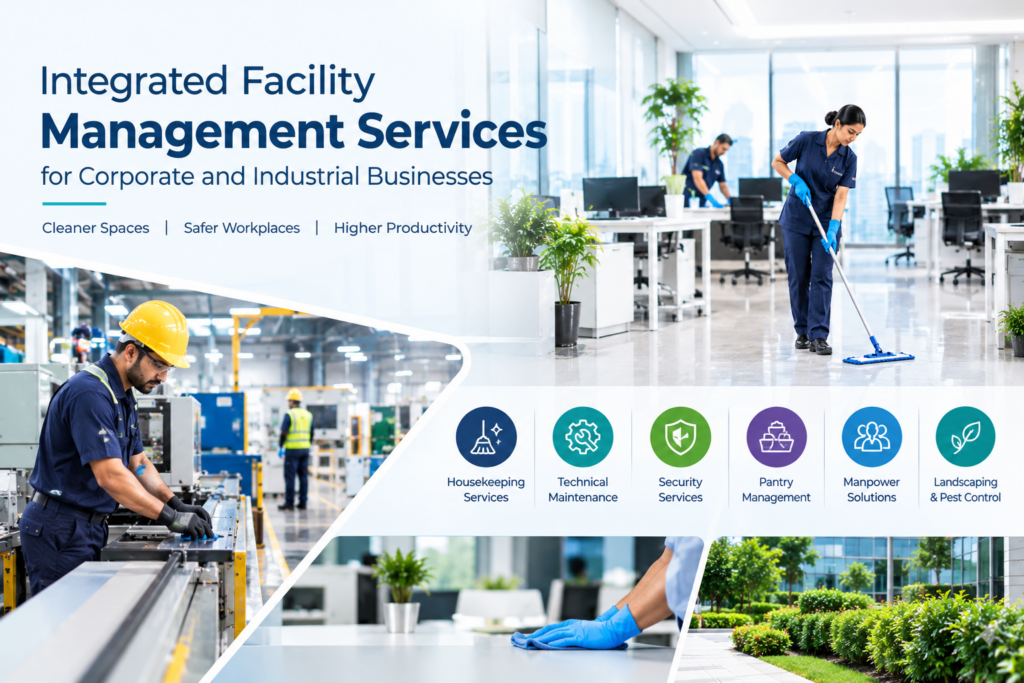
Arise Facility Solutions provides facility management and workplace support services for corporate and industrial environments. Its service portfolio includes corporate housekeeping, industrial housekeeping, pantry management, technical maintenance, security, pest control, landscaping, manpower solutions, and integrated facility management.
In this guide, we explore how integrated facility management works, the challenges it addresses, its major benefits, and the practical steps businesses can take to select the right service partner.
What Are Integrated Facility Management Services?
Integrated Facility Management (IFM) is an approach in which multiple workplace support services are coordinated through one management framework.
Rather than managing separate contractors for cleaning, maintenance, security, and landscaping, an organization can work with one provider to coordinate the agreed services.
The exact scope depends on the business, property, operational requirements, and service agreement.
Common Services Included in Integrated Facility Management
1. Corporate Housekeeping Services
These services help maintain professional office environments through workstation cleaning, floor care, washroom sanitation, reception maintenance, glass cleaning, waste collection, and common area upkeep.
2. Industrial Housekeeping
Industrial housekeeping focuses on factories, warehouses, production units, and other industrial premises. Activities may include floor cleaning, dust control, waste removal, spill management, and maintaining orderly work areas under approved safety procedures.
3. Technical Maintenance
Buildings depend on electrical, plumbing, HVAC, lighting, pumping, and other technical systems. Scheduled inspections and preventive maintenance help identify issues before they lead to major disruptions.
4. Security Services
Depending on the contract, security support may include access control, visitor management, patrols, incident reporting, and coordination with site emergency procedures.
5. Pantry Management Services
Pantry operations may include cleaning counters, maintaining sinks, replenishing consumables, monitoring supplies, and keeping shared refreshment areas organized.
6. Landscaping and Pest Control
Landscaping helps maintain outdoor areas, gardens, and green spaces. Pest control services address pest-related concerns using suitable methods and appropriate safety precautions.
7. Manpower Solutions
Facility operations depend on having the right people available for assigned duties. Manpower support can help organizations meet staffing requirements for housekeeping and other agreed workplace services.
When these functions are coordinated effectively, businesses can establish clearer accountability and improve the management of day-to-day facility operations.
Common Facility Management Challenges Faced by Businesses
1. Managing Multiple Service Providers
A business may hire separate vendors for housekeeping, electrical maintenance, security, pest control, and landscaping.
Each contractor may have different reporting procedures, working hours, supervisors, and service standards. This can make communication difficult, especially when an issue involves more than one department.
For example, a water leak may require coordination between the maintenance team, housekeeping staff, and the department responsible for the affected area. Without clear responsibilities, the response can be delayed.
An integrated arrangement can simplify coordination by establishing defined reporting and escalation procedures.
2. Inconsistent Housekeeping Standards
A workplace may appear clean in reception areas while washrooms, storage spaces, staircases, and other less visible areas receive insufficient attention.
In industrial facilities, inconsistent cleaning can contribute to dust accumulation, cluttered walkways, and poorly managed waste.
Professional Housekeeping Services use defined cleaning schedules, assigned responsibilities, inspection checklists, and corrective action procedures to help maintain consistent standards.
3. Unplanned Maintenance and Equipment Downtime
Electrical faults, plumbing failures, malfunctioning air conditioning, and equipment breakdowns can interrupt normal business activities.
When maintenance is handled only after something fails, organizations may face emergency repair expenses and operational delays.
Preventive maintenance planning helps identify potential problems and schedule servicing according to equipment requirements and manufacturer recommendations.
4. Rising Operational Expenses
Facility management costs extend beyond the monthly payment to a contractor.
Businesses may also need to account for staff recruitment, training, supervision, uniforms, cleaning equipment, consumables, vendor administration, and maintenance expenses.
Poor coordination can create duplication of effort and unnecessary spending.
A coordinated service model can improve cost visibility by consolidating agreed services and reviewing their performance against a defined budget.
However, outsourcing does not automatically guarantee savings. Businesses should compare the full cost of each arrangement, including service scope, staffing, equipment, materials, taxes, and exclusions.
5. Difficulty Monitoring Service Quality
Without measurable standards, it can be difficult to determine whether a service provider is meeting expectations.
A facility manager may receive complaints about cleanliness or maintenance but lack reliable records showing when tasks were completed or how issues were resolved.
Service-level agreements, inspection reports, response-time targets, and regular performance reviews help make service quality easier to monitor.
6. Workplace Safety and Compliance Concerns
Poorly maintained facilities can expose employees and visitors to hazards such as wet floors, blocked exits, damaged electrical fixtures, and improperly stored chemicals.
Industrial sites may have additional risks involving machinery, production residues, hazardous materials, and restricted work areas.
Businesses should ensure that facility management procedures align with applicable legal requirements, site safety rules, and industry-specific standards. A service provider can support these processes, but the business must also retain its own applicable legal and safety responsibilities.
Benefits of Integrated Facility Management Services
1. One Point of Coordination
One of the main advantages of integrated facility management is simplified coordination.
Instead of contacting multiple contractors for routine issues, businesses can use an agreed reporting structure to communicate service requests and track progress.
This can help managers:
- Reduce repetitive vendor coordination.
- Establish clear responsibility for service delivery.
- Escalate unresolved issues through defined channels.
- Review performance across several support functions.
For organizations operating multiple sites, a coordinated approach can also support more consistent reporting.
2. Better Control Over Operating Costs
Integrated facility management provides an opportunity to review support services together rather than evaluating each function in isolation.
Businesses can identify overlapping responsibilities, review staffing requirements, monitor consumable usage, and plan maintenance more effectively.
For example, consolidating service reporting can help a facility manager identify repeated cleaning complaints or unnecessary emergency maintenance visits.
The objective should be to achieve better value for money, not simply to select the lowest-priced contractor. Service quality, worker training, safety, equipment availability, and continuity should all form part of the evaluation.
3. Improved Workplace Hygiene
A clean workplace contributes to employee comfort and creates a professional environment for visitors.
Corporate Housekeeping Services help maintain workstations, reception areas, meeting rooms, washrooms, and common spaces. Regular cleaning also helps prevent avoidable accumulation of dust and waste.
Cleaning schedules should reflect occupancy, foot traffic, facility type, and the level of hygiene required in each area.
Businesses with multiple shifts may need additional cleaning coverage during operating hours rather than relying exclusively on an end-of-day cleaning routine.
4. More Organized Industrial Operations
Industrial Housekeeping is an important part of maintaining orderly production and storage environments.
Factories and warehouses often deal with packaging materials, dust, oil, grease, production waste, and heavy equipment. These conditions require appropriate cleaning methods and clear procedures.
An integrated service arrangement can help coordinate cleaning schedules with production requirements, waste collection, maintenance activities, and site safety controls.
Cleaning near moving machinery or hazardous processes must always follow the facility’s approved safety and isolation procedures.
5. Proactive Maintenance Planning
Maintenance becomes easier to manage when inspection schedules, service records, and repair requests are documented.
A coordinated facility management plan can include:
- Scheduled equipment inspections.
- Preventive maintenance calendars.
- Maintenance request registers.
- Priority levels for reported faults.
- Records of completed repairs.
- Follow-up inspections where necessary.
These practices help businesses identify recurring faults and plan repairs before problems affect normal operations.
6. Better Employee Experience
Employees interact with workplace facilities every day.
Clean washrooms, organized pantries, comfortable office temperatures, functioning lighting, and well-maintained common areas contribute to a more positive work environment.
Pantry Management Services can support hygiene and organization in shared refreshment areas, while housekeeping and maintenance teams address other day-to-day workplace needs.
Although facility management alone cannot determine employee satisfaction, reliable support services can remove common sources of frustration.
7. Consistent Standards Across Multiple Locations
Organizations with several offices, warehouses, or production facilities may struggle to maintain uniform service standards.
An integrated arrangement can establish common procedures, reporting formats, inspection criteria, and performance indicators across locations.
Local adjustments may still be necessary because facilities differ in size, occupancy, operating hours, and risk profile.
The aim is to maintain consistent expectations while allowing each site to meet its specific operational requirements.
8. Clearer Performance Measurement
A professional facility management arrangement should make performance visible through measurable indicators.
Depending on the service scope, businesses may monitor:
- Housekeeping inspection scores.
- Cleaning task completion.
- Maintenance response times.
- Preventive maintenance completion rates.
- Number of unresolved complaints.
- Equipment availability.
- Safety observations.
- Consumable usage.
These measures help managers identify gaps, discuss performance with the service provider, and agree on corrective actions.
How to Implement Integrated Facility Management Successfully
Businesses should plan the transition carefully rather than outsourcing every service without first understanding their needs.
Step 1: Conduct a Facility Assessment
Prepare an inventory of the building, equipment, support services, staffing requirements, and existing maintenance arrangements.
Identify frequent complaints, high-risk areas, recurring repairs, and services that are difficult to coordinate.
This assessment provides a baseline against which future performance can be evaluated.
Step 2: Define the Scope of Services
List the services required and specify what is included in each one.
For example, the housekeeping scope should define cleaning frequencies, working hours, consumables, equipment responsibilities, and areas covered.
Technical maintenance should clarify which systems are included, which activities require specialist contractors, and how emergency repairs will be handled.
A detailed scope prevents misunderstandings after the contract begins.
Step 3: Establish Service-Level Agreements
A service-level agreement (SLA) defines the expected level of service.
It may include:
- Required cleaning standards.
- Maintenance response and resolution targets.
- Inspection frequency.
- Complaint escalation procedures.
- Reporting requirements.
- Staffing and replacement arrangements.
- Corrective action timelines.
Targets should be practical, measurable, and appropriate for the facility.
Step 4: Select an Experienced Provider
Evaluate potential service providers based on their experience, workforce training, supervision, safety procedures, reporting methods, and ability to deliver the required services.
Ask how they manage staff absences, urgent maintenance requests, quality failures, and communication between departments.
Businesses should also review the provider’s contractual terms, references where available, and applicable compliance documentation.
Step 5: Plan the Transition
Before services begin, organize site induction, access permissions, equipment handover, cleaning schedules, emergency contacts, and reporting procedures.
Inform employees and relevant departments about how to report facility-related problems.
A planned transition reduces confusion and helps the service provider understand the workplace before taking full responsibility for the agreed activities.
Step 6: Monitor and Review Performance
Hold regular review meetings to discuss inspection results, unresolved complaints, maintenance records, staffing issues, and safety observations.
When a service falls below the agreed standard, document the issue and assign a deadline for corrective action.
Reviewing performance regularly helps maintain accountability and supports continuous improvement.
Prevention and Maintenance Tips for Long-Term Success
Integrated facility management works best when preventive measures are built into everyday operations.
Maintain a Preventive Maintenance Calendar
Record the required servicing and inspection intervals for building systems and equipment. Follow manufacturer recommendations, applicable regulations, and site-specific maintenance requirements.
Keep Cleaning Schedules Updated
Review housekeeping frequencies when employee numbers, production volumes, visitor traffic, or working hours change.
High-traffic areas may require additional cleaning during the day.
Maintain Accurate Records
Keep inspection reports, work orders, service histories, cleaning checklists, and complaint records organized.
Reliable documentation helps managers identify recurring problems and verify that agreed tasks have been completed.
Monitor Consumables and Utilities
Track the use of cleaning materials, washroom supplies, pantry consumables, water, and electricity where relevant.
Unusual changes may indicate wastage, leakage, poor stock control, or an opportunity to review operating procedures.
Review Safety Procedures Regularly
Keep emergency exits accessible, report damaged fixtures promptly, and ensure workers follow applicable PPE and chemical-handling procedures.
Review site safety instructions whenever the work environment or operational risks change.
Encourage Communication
Employees should have a simple way to report maintenance issues, hygiene complaints, and safety concerns.
A clear reporting process helps the facility team respond promptly and prevents minor problems from being overlooked.
Why Professional Facility Management Matters
Facility management affects the daily experience of employees, visitors, contractors, and customers.
When cleaning, maintenance, security, and other support functions are poorly coordinated, managers may spend more time resolving operational problems and less time planning improvements.
Professional Facility Management Services can provide trained personnel, defined procedures, supervision, reporting, and coordinated service delivery.
For corporate organizations, this can support clean workspaces, well-maintained common areas, and consistent service standards.
For industrial businesses, it can support organized production areas, planned maintenance, waste management, and coordination between facility teams and operational departments.
The right service arrangement depends on the facility’s size, industry, risk profile, budget, and operational requirements. Businesses should assess these factors before deciding whether to outsource individual functions or adopt an integrated model.
How Arise Facility Solutions Helps
Arise Facility Solutions supports corporate and industrial businesses with workplace services designed around their operational requirements.
Its service portfolio includes Corporate Housekeeping Services, Industrial Housekeeping, Pantry Management Services, Technical Maintenance, Security Services, Manpower Solutions, Pest Control, Landscaping, and Integrated Facility Management Services.
These services can help organizations address a range of workplace requirements, from maintaining clean offices and industrial premises to coordinating technical support and common-area upkeep.
For corporate facilities, housekeeping and pantry support help maintain organized, hygienic shared spaces. For industrial sites, housekeeping requirements can be planned around operational activities, cleaning priorities, and applicable safety procedures.
Where a broader service arrangement is required, businesses can discuss their facility requirements, staffing needs, service scope, reporting expectations, and maintenance priorities with Arise Facility Solutions.
A useful starting point is to identify the main operational challenges at your premises and determine which services need to be coordinated under one management framework.
Visit https://arisefacilitysolutions.com/ to learn more about Arise Facility Solutions and its workplace support services.
Conclusion
Integrated Facility Management Services provide businesses with a coordinated approach to managing housekeeping, technical maintenance, security, pantry operations, landscaping, and other workplace support functions.
By establishing clear responsibilities, service standards, inspection procedures, and reporting systems, organizations can reduce the administrative burden of managing multiple contractors and gain better visibility into facility performance.
Corporate offices can benefit from consistent housekeeping and well-maintained shared spaces, while industrial facilities can improve coordination between cleaning, maintenance, and daily operations.
Successful implementation requires careful planning, a clearly defined scope, a suitable service provider, and regular performance reviews. Outsourcing should be evaluated against the organization’s actual requirements rather than assumed to be the least expensive option.
Arise Facility Solutions offers a range of housekeeping and facility management services for corporate and industrial environments. Businesses looking to simplify workplace operations can explore these services and determine which arrangement best fits their facilities.
A well-coordinated workplace support system helps businesses maintain their premises, address operational issues, and focus more effectively on their core activities.
Frequently Asked Questions
1. What are Integrated Facility Management Services?
Integrated Facility Management Services coordinate multiple workplace support functions under one management framework. Depending on the contract, these may include housekeeping, maintenance, security, pantry management, landscaping, and pest control.
2. What is the difference between facility management and integrated facility management?
Facility management covers the services needed to maintain and operate a workplace. Integrated facility management brings multiple services together under a coordinated management structure, often with a single primary service provider.
3. What are the benefits of Integrated Facility Management Services?
Potential benefits include simpler vendor coordination, clearer accountability, consistent service procedures, improved reporting, planned maintenance, and better visibility into operating costs.
4. Which industries can benefit from integrated facility management?
Corporate offices, manufacturing plants, warehouses, logistics centres, educational institutions, healthcare facilities, retail properties, and commercial buildings may benefit from integrated facility management, depending on their requirements.
5. Are housekeeping services included in integrated facility management?
Housekeeping is commonly included, although the exact scope depends on the service agreement. It may cover office cleaning, washroom sanitation, floor maintenance, waste collection, and common-area upkeep.
6. What is the role of Industrial Housekeeping in facility management?
Industrial Housekeeping helps maintain clean and organized factories, warehouses, and production areas. It can include floor cleaning, dust control, waste removal, and spill management under site-specific safety procedures.
7. Can integrated facility management help control operating costs?
It can improve cost visibility and coordination by consolidating agreed services, monitoring consumables, and planning maintenance. Actual savings depend on the contract, service requirements, and the cost of the existing arrangement.
8. What should a facility management contract include?
A contract should define the scope of services, responsibilities, staffing, working hours, performance standards, reporting procedures, safety requirements, pricing, exclusions, and escalation processes.
9. Why is preventive maintenance important?
Preventive maintenance helps identify potential equipment problems before they cause major failures. It can reduce unexpected downtime and support the safe, reliable operation of building systems.
10. What are Pantry Management Services?
Pantry Management Services help maintain hygienic and organized workplace pantry areas. Depending on the agreement, they may include counter cleaning, sink maintenance, waste disposal, and consumable replenishment.
11. How can businesses measure facility management performance?
Businesses can use service-level agreements, housekeeping inspection scores, maintenance completion rates, complaint response times, equipment availability, and regular performance reviews.
12. Why choose Arise Facility Solutions?
Arise Facility Solutions offers corporate housekeeping, industrial housekeeping, pantry management, technical maintenance, security, landscaping, pest control, manpower solutions, and integrated facility management services for businesses with different workplace requirements.
13. Is integrated facility management suitable for small businesses?
Yes. Small businesses may benefit from coordinated support services if managing multiple contractors internally creates unnecessary work. The appropriate arrangement depends on the premises, service requirements, and budget.
14. How do businesses choose an integrated facility management company?
Businesses should assess industry experience, workforce training, service coverage, supervision, safety procedures, reporting systems, references, contract terms, and the provider’s ability to meet site-specific needs.
15. Does integrated facility management include security and technical maintenance?
It can include both, provided they are part of the agreed service scope. Businesses should confirm which security activities, technical systems, specialist repairs, and emergency services are covered by the contract.