Introduction
A clean and organized workplace does more than create a good first impression. It supports employee productivity, workplace safety, hygiene, and the smooth functioning of everyday business operations. Whether it is a corporate office, manufacturing unit, warehouse, commercial building, or industrial plant, the condition of the workplace can influence how effectively employees perform their duties.
Many businesses focus on sales, production, customer service, and business development but underestimate the role of workplace cleanliness. Dusty workstations, poorly maintained washrooms, overflowing waste bins, cluttered walkways, and unhygienic pantry areas can create distractions and unnecessary operational problems.
Professional housekeeping services help businesses address these challenges through planned cleaning schedules, trained staff, quality inspections, and consistent maintenance practices.
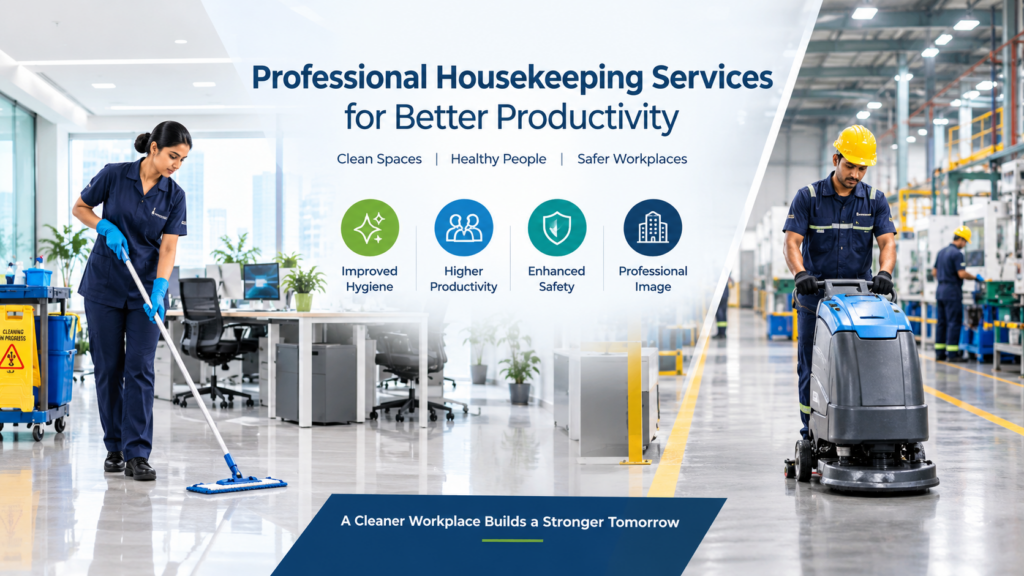
For corporate offices, effective housekeeping creates a comfortable environment where employees can concentrate on their responsibilities. In industrial facilities, systematic cleaning helps maintain safer walkways, organized production areas, and better housekeeping standards around machinery and equipment.
This article explains how professional housekeeping services improve workplace productivity, why businesses should invest in structured cleaning practices, and how organizations can choose a suitable service provider.
What Are Professional Housekeeping Services?
Professional housekeeping services involve the planned cleaning, sanitation, and upkeep of workplaces and commercial properties. These services are delivered by trained personnel who follow defined procedures, cleaning schedules, and safety guidelines.
Depending on the facility, housekeeping may include:
- Office and workstation cleaning
- Floor sweeping, scrubbing, and mopping
- Restroom cleaning and sanitation
- Reception and meeting room maintenance
- Glass and partition cleaning
- Waste collection and segregation
- Pantry and cafeteria cleaning
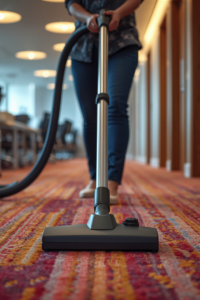
- Carpet and upholstery maintenance
- Industrial floor cleaning
- Common area upkeep
- Periodic deep cleaning
The scope of work should reflect the type of facility, number of occupants, working hours, operational risks, and required hygiene standards.
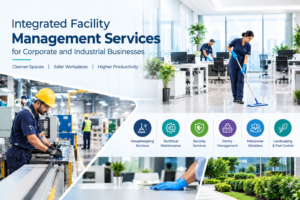
Professional housekeeping can also form part of a wider facility management plan that includes technical maintenance, security, pest control, landscaping, and other workplace support services.
Common Workplace Cleaning Challenges
Businesses often encounter cleaning problems when housekeeping is handled without a defined plan or adequate supervision.
1. Inconsistent Cleaning Standards
When employees or cleaning teams work without documented procedures, some areas may receive regular attention while others are neglected. Restrooms, staircases, storage rooms, pantry areas, and less frequently used corners are particularly vulnerable to inconsistent cleaning.
A structured cleaning schedule assigns responsibilities, establishes frequencies, and provides a method for checking whether tasks have been completed.
2. Poor Washroom Hygiene
Washrooms require regular cleaning because they are shared by multiple employees and visitors throughout the day. Empty soap dispensers, unpleasant odours, wet floors, and unclean surfaces affect comfort and hygiene.
Professional housekeeping teams can follow inspection schedules to monitor cleanliness, replenish essential supplies, and report plumbing or maintenance problems.
3. Cluttered Walkways and Work Areas
Boxes, discarded materials, loose cables, and misplaced equipment can obstruct movement and increase the risk of slips, trips, and falls.
In industrial facilities, clutter can also interfere with material movement and emergency access. A clear housekeeping procedure helps keep designated walkways and work areas orderly.
4. Limited Supervision
Assigning cleaning tasks without inspecting the results can lead to missed work and repeated complaints. Businesses need a system for checking cleaning quality, recording problems, and ensuring corrective action.
Professional Corporate Housekeeping Services often use supervisor inspections, checklists, attendance monitoring, and complaint registers to maintain accountability.
5. Difficulty Maintaining Industrial Areas
Industrial workplaces may accumulate dust, oil, grease, production residues, and packaging waste. Standard office cleaning methods may not be suitable for these environments.
Industrial Housekeeping requires site-specific procedures, appropriate equipment, suitable cleaning products, and coordination with production teams. Cleaning near moving machinery or hazardous materials must follow the facility’s safety procedures.
How Housekeeping Services Improve Workplace Productivity
1. Reduce Distractions
Employees need an organized environment to focus on their work. Dirty desks, overflowing bins, unpleasant odours, and cluttered common areas can become repeated distractions.
Regular housekeeping keeps shared spaces orderly and reduces the time employees spend dealing with avoidable workplace problems.
For example, a company with a defined workstation cleaning schedule and clear waste disposal arrangements can maintain a more organized office without relying on employees to resolve cleaning issues themselves.
2. Support Employee Health and Well-Being
Workplace hygiene is an important part of employee well-being. Dust accumulation, dirty shared surfaces, and neglected washrooms can create uncomfortable conditions.
Professional housekeeping helps maintain cleanliness through regular surface cleaning, restroom sanitation, waste removal, and appropriate attention to frequently touched areas.
Cleaning alone cannot prevent every illness, but consistent hygiene practices can reduce certain environmental risks and support a healthier workplace.
3. Improve Workplace Safety
Good housekeeping is a fundamental part of workplace safety.
Spills, loose materials, blocked exits, and cluttered walkways can create avoidable hazards. In factories and warehouses, these problems may also interfere with equipment movement and material handling.
A practical housekeeping programme should include:
- Prompt identification and reporting of spills
- Clear walkways and emergency exits
- Proper waste segregation
- Safe storage of cleaning materials
- Warning signs during wet-floor cleaning
- Appropriate personal protective equipment
- Safe procedures around machinery and electrical equipment
These measures help reduce hazards and encourage employees to maintain orderly work areas.
4. Create a Better Customer Experience
Clients, business partners, job applicants, and visitors often form an impression of an organization when they enter its premises.
A clean reception area, well-maintained meeting room, hygienic washroom, and organized common spaces communicate professionalism.
Corporate Housekeeping Services help businesses maintain these standards throughout the working day rather than relying only on occasional cleaning before important meetings.
5. Reduce Time Spent on Operational Complaints
Repeated complaints about dirty washrooms, missing supplies, overflowing bins, or unclean pantry areas consume time that managers could use for other responsibilities.
A defined reporting system allows housekeeping supervisors to record complaints, assign corrective actions, and track completion.
Businesses can monitor the number of recurring complaints and identify areas that require a change in cleaning frequency or staffing.
6. Support Smoother Industrial Operations
In manufacturing and warehousing environments, housekeeping contributes to workplace organization and operational continuity.
Clearly marked storage areas, clean walkways, prompt removal of waste, and appropriate spill management help employees move around the facility more safely.
Industrial Housekeeping should be coordinated with production schedules so that cleaning activities do not interfere with equipment operation or create additional hazards.
Cleaning around machinery should only take place under approved procedures, including isolation or shutdown requirements where applicable.
7. Maintain Better Pantry Hygiene
Pantry areas are used throughout the day and can quickly become untidy without regular attention.
Professional Pantry Management Services can include cleaning counters, maintaining sinks, managing waste, monitoring consumables, and keeping shared food preparation areas orderly.
Businesses should establish clear responsibilities for food storage, refrigerator cleaning, spill removal, and replenishment of hygiene supplies.
A well-maintained pantry supports employee comfort and helps prevent avoidable hygiene complaints.
Practical Steps to Improve Workplace Housekeeping
Businesses do not need to make complicated changes to improve housekeeping standards. A systematic approach can produce measurable improvements.
Step 1: Conduct a Workplace Inspection
Inspect the entire facility and identify areas that require routine, periodic, or specialized cleaning.
For corporate offices, review workstations, reception areas, washrooms, meeting rooms, lifts, and pantries.
For industrial sites, inspect production floors, warehouses, loading areas, staff facilities, and designated waste collection points.
Record existing issues and prioritize areas according to hygiene requirements, foot traffic, and safety risks.
Step 2: Create a Cleaning Schedule
Develop a schedule that specifies what must be cleaned, how frequently the task should be performed, and who is responsible.
A sample schedule may include:
- Throughout the day: Spill response, waste monitoring, and high-traffic area checks.
- Daily: Workstations, floors, washrooms, reception areas, and pantry cleaning.
- Weekly: Detailed cleaning of selected fixtures, partitions, and less frequently used areas.
- Monthly or as required: Planned deep cleaning, depending on site conditions and material requirements.
The final frequency should be based on the facility’s actual needs rather than a fixed schedule for every location.
Step 3: Train Housekeeping Personnel
Staff should understand the correct cleaning method for each surface and area.
Training should cover chemical dilution, equipment handling, PPE, waste segregation, wet-floor warnings, and incident reporting.
Industrial teams may also require site-specific safety induction and authorization before entering restricted areas.
Step 4: Use Suitable Equipment and Materials
Different environments require different cleaning tools and products. Using unsuitable chemicals can damage surfaces, create health risks, or reduce cleaning effectiveness.
Select equipment according to floor type, site size, soil conditions, and operational requirements. Cleaning chemicals should be labelled, stored safely, and used according to manufacturer instructions.
Step 5: Introduce Quality Inspections
Supervisors should use inspection checklists to verify that tasks have been completed to the required standard.
Record issues, assign responsibility, and set deadlines for corrective action. Repeated failures should trigger a review of training, staffing, schedules, or cleaning methods.
Step 6: Review Performance Regularly
Businesses can track housekeeping performance through indicators such as:
- Cleaning task completion rates
- Number of hygiene complaints
- Time taken to resolve complaints
- Inspection scores
- Availability of cleaning supplies
- Reported housekeeping hazards
- Completion of scheduled deep cleaning
Review these measures monthly or at another suitable interval. Use the results to improve the service rather than treating inspections as a paperwork exercise.
Prevention Tips for Long-Term Workplace Cleanliness
Maintaining workplace cleanliness requires consistent effort from both service teams and facility users.
Establish Clear Responsibilities
Employees should know how to report spills, maintenance faults, waste problems, and damaged fixtures. Housekeeping teams should have clear instructions on which tasks they are responsible for completing.
Maintain Waste Segregation
Place clearly labelled waste bins at convenient locations. Follow applicable local requirements and the facility’s waste management procedures.
Industrial sites should have specific arrangements for potentially hazardous waste rather than mixing it with ordinary workplace waste.
Keep Cleaning Supplies Available
Running out of soap, bin liners, disinfectants, or other essential supplies can interrupt cleaning routines. Maintain stock records and reorder supplies before they run out.
Schedule Periodic Deep Cleaning
Routine cleaning may not remove all accumulated dirt from carpets, upholstery, high-level surfaces, or difficult-to-access areas. Schedule deep cleaning according to occupancy, surface type, and operational conditions.
Encourage Employees to Maintain Order
Housekeeping works best when employees also take responsibility for their work areas. Encourage staff to dispose of waste properly, avoid blocking walkways, and report hazards promptly.
Review the Plan When Operations Change
Office expansions, additional shifts, increased production, and higher visitor numbers can change cleaning requirements. Review staffing and cleaning frequencies whenever the facility changes significantly.
Why Professional Facility Management Matters
Housekeeping is one part of a well-managed facility. Businesses may also need technical maintenance, pest control, security, landscaping, manpower support, and other services.
Coordinating these activities through a professional facility management partner can simplify communication and help maintain consistent workplace standards.
A coordinated approach can offer several benefits:
- Clearer responsibility for daily support services
- Better coordination between housekeeping and maintenance teams
- Planned inspections and preventive maintenance
- Documented reporting and complaint resolution
- Easier supervision across multiple locations
- Better visibility into recurring operational problems
Businesses should assess the provider’s service scope, staffing arrangements, training practices, reporting process, safety procedures, and ability to meet site-specific requirements before signing an agreement.
How Arise Facility Solutions Helps
Arise Facility Solutions provides facility support services for corporate and industrial environments. The company offers services designed to help organizations maintain clean, safe, and professionally managed workplaces.
Its service portfolio includes Corporate Housekeeping Services, Industrial Housekeeping, Pantry Management Services, Facility Management Services, technical maintenance, security services, manpower solutions, pest control, landscaping, and Integrated Facility Management Services.
For corporate workplaces, housekeeping support can help maintain workstations, reception areas, washrooms, meeting rooms, and common facilities. For industrial environments, cleaning requirements can be planned around production activities, site conditions, safety procedures, and waste management needs.
Pantry Management Services support the upkeep of shared pantry areas, while broader facility management arrangements can coordinate housekeeping with maintenance and other support functions.
Businesses considering outsourcing should begin by identifying their main operational challenges, cleaning requirements, site size, working hours, and service expectations. This information helps establish a suitable scope of work and a practical service plan.
To learn more about the available services, visit https://arisefacilitysolutions.com/ and explore the solutions relevant to your workplace.
Conclusion
Professional housekeeping services play an important role in maintaining productive, safe, and organized workplaces. Clean surroundings reduce avoidable distractions, support employee well-being, improve visitor experiences, and help businesses maintain consistent operating standards.
For corporate offices, structured housekeeping supports a comfortable and professional working environment. For factories, warehouses, and manufacturing units, Industrial Housekeeping helps maintain orderly work areas and supports established safety procedures.
The best results come from combining trained personnel, appropriate equipment, documented cleaning schedules, regular inspections, and clear communication. Businesses should review their cleaning requirements regularly and address recurring issues before they become larger operational problems.
Arise Facility Solutions supports corporate and industrial clients with housekeeping and wider facility management services tailored to workplace requirements. Choosing an experienced service partner can help organizations maintain their premises while allowing internal teams to concentrate on core business activities.
Frequently Asked Questions
1. What are professional housekeeping services?
ANS:- Professional housekeeping services involve routine and scheduled cleaning, sanitation, waste collection, and upkeep of workplaces. Services can include office cleaning, restroom maintenance, floor care, pantry cleaning, and industrial housekeeping.
2. How do housekeeping services improve workplace productivity?
ANS:- Housekeeping helps reduce clutter, maintain clean shared spaces, address hygiene concerns, and keep walkways clear. These practices support employee comfort and reduce avoidable workplace distractions.
3. What is included in corporate housekeeping services?
ANS:- Corporate housekeeping services commonly include workstation cleaning, floor maintenance, restroom sanitation, reception cleaning, meeting room upkeep, glass cleaning, waste collection, and pantry area cleaning.
4. What is Industrial Housekeeping?
ANS:- Industrial Housekeeping involves maintaining cleanliness and order in factories, production units, warehouses, and other industrial environments. It may include floor cleaning, dust control, waste removal, spill response, and cleaning around designated equipment areas under approved safety procedures.
5. What are Pantry Management Services?
ANS:- Pantry Management Services help maintain clean and organized pantry areas. Depending on the agreement, they may include counter cleaning, sink maintenance, waste disposal, stock monitoring, and replenishment of consumables.
6. How often should an office be cleaned?
ANS:- Most offices need daily cleaning of floors, workstations, washrooms, and common areas. High-traffic spaces may require attention throughout the day, while deep cleaning should be scheduled according to occupancy and site conditions.
7. Can professional housekeeping help reduce workplace safety risks?
ANS:- Yes. Proper housekeeping can help address hazards such as spills, cluttered walkways, improperly stored materials, and overflowing waste bins. It should be combined with appropriate safety training and workplace risk controls.
8. What should businesses look for in a housekeeping service provider?
ANS:- Businesses should review staff training, supervision, cleaning procedures, safety practices, service coverage, quality inspections, complaint handling, and the provider’s experience with similar facilities.
9. What is the difference between housekeeping and facility management?
ANS:- Housekeeping focuses primarily on cleaning, hygiene, and workplace upkeep. Facility management covers a wider range of services, potentially including housekeeping, technical maintenance, security, pest control, landscaping, and other building support functions.
10. Why should a company outsource housekeeping services?
ANS:- Outsourcing can reduce the administrative work involved in recruiting, training, scheduling, and supervising cleaning staff. It also gives businesses access to a service team operating under an agreed scope and quality monitoring process.
11. How can businesses measure housekeeping performance?
ANS:- Businesses can monitor cleaning completion rates, inspection scores, complaint frequency, response times, supply availability, and corrective action records. Regular reviews help identify areas where procedures need improvement.
12. Does Arise Facility Solutions provide housekeeping and facility management services?
ANS:- Arise Facility Solutions offers corporate housekeeping, industrial housekeeping, pantry management, and broader facility management services. Businesses can visit its website to review the service portfolio and enquire about their requirements.